

Description
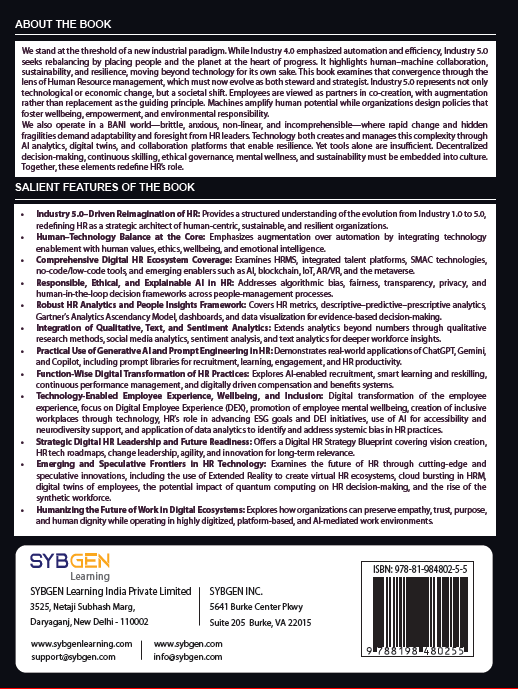
SALIENT FEATURES OF THE BOOK
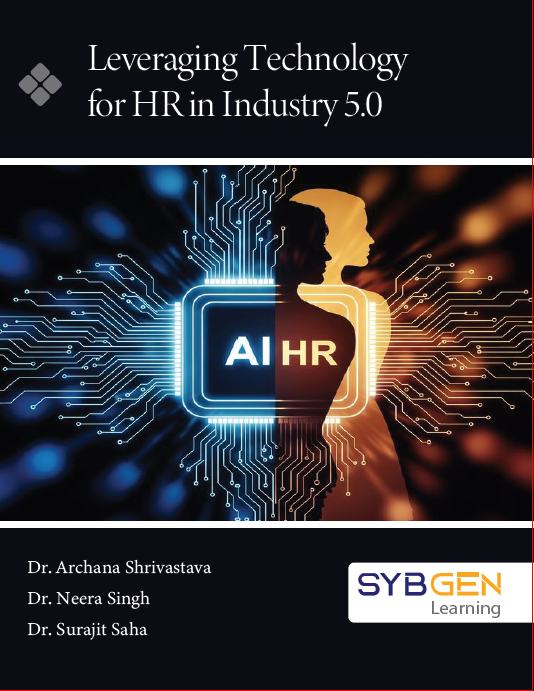
Industry 5.0–Driven Reimagination of HR: Provides a structured understanding of the evolution from Industry 1.0 to 5.0, redefining HR as a strategic architect of human-centric, sustainable, and resilient organizations.
- Human–Technology Balance at the Core: Emphasizes augmentation over automation by integrating technology enablement with human values, ethics, wellbeing, and emotional intelligence.
- Comprehensive Digital HR Ecosystem Coverage: Examines HRMS, integrated talent platforms, SMAC technologies, no-code/low-code tools, and emerging enablers such as AI, blockchain, IoT, AR/VR, and the metaverse.
- Responsible, Ethical, and Explainable AI in HR: Addresses algorithmic bias, fairness, transparency, privacy, and human-in-the-loop decision frameworks across people-management processes.
- Robust HR Analytics and People Insights Framework: Covers HR metrics, descriptive–predictive–prescriptive analytics, Gartner’s Analytics Ascendancy Model, dashboards, and data visualization for evidence-based decision-making.
- Integration of Qualitative, Text, and Sentiment Analytics: Extends analytics beyond numbers through qualitative research methods, social media analytics, sentiment analysis, and text analytics for deeper workforce insights.
- Practical Use of Generative AI and Prompt Engineering in HR: Demonstrates real-world applications of ChatGPT, Gemini, and Copilot, including prompt libraries for recruitment, learning, engagement, and HR productivity.
- Function-Wise Digital Transformation of HR Practices: Explores AI-enabled recruitment, smart learning and reskilling, continuous performance management, and digitally driven compensation and benefits systems.
- Technology-Enabled Employee Experience, Wellbeing, and Inclusion: Digital transformation of the employee experience, focus on Digital Employee Experience (DEX), promotion of employee mental wellbeing, creation of inclusive workplaces through technology, HR’s role in advancing ESG goals and DEI initiatives, use of AI for accessibility and neurodiversity support, and application of data analytics to identify and address systemic bias in HR practices.
- Strategic Digital HR Leadership and Future Readiness: Offers a Digital HR Strategy Blueprint covering vision creation, HR tech roadmaps, change leadership, agility, and innovation for long-term relevance.
- Emerging and Speculative Frontiers in HR Technology: Examines the future of HR through cutting-edge and speculative innovations, including the use of Extended Reality to create virtual HR ecosystems, cloud bursting in HRM, digital twins of employees, the potential impact of quantum computing on HR decision-making, and the rise of the synthetic workforce.
- Humanizing the Future of Work in Digital Ecosystems: Explores how organizations can preserve empathy, trust, purpose, and human dignity while operating in highly digitized, platform-based, and AI-mediated work environments.